Delphina Handwritten Font for Crafters & Sellers
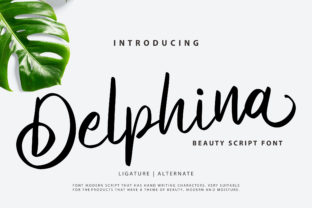
If you’ve ever held a handmade candle, admired a boutique gift tag, or paused over a wedding welcome sign that felt *just right*, you know how much weight a single font carries in product storytelling. That’s why I reached for Delphina the moment it landed in my design folder — not just because it’s beautiful, but because it *works*. Delphina is a Script Handwritten typeface with quiet confidence: smooth, rhythmic strokes; subtle contrast between thick and thin lines; and a relaxed, modern charm that never leans into trendiness. It doesn’t shout — it invites. And for crafters building real-world products, that balance of elegance and approachability is rare.
I use Delphina across physical and digital product lines — from printed greeting cards sold at local markets to downloadable planner pages on Etsy. Its smart spacing and generous x-height make it surprisingly legible even at 12–14pt on small product labels (think apothecary jars, soap tags, or mini sticker sheets). On larger applications — like farmhouse-style wall art, wedding welcome boards, or chalkboard-style café signs — Delphina shines as a display font. The lowercase ‘g’, ‘y’, and ‘f’ have gentle, intentional swashes that add movement without sacrificing clarity. No awkward overlaps or tangled loops. Just clean, confident handwriting — like something you’d write yourself, only perfected.
For Cricut and Silhouette users, Delphina cuts cleanly at sizes 20pt and up. I tested it on vinyl for tote bags and heat-transfer vinyl for organic cotton tees — no jagged edges, no broken connections. When exporting SVG files for layered designs, the outlines remain crisp and scalable. That reliability matters when you’re batch-cutting 50+ labels or prepping files for print-on-demand partners. And yes — it holds up beautifully in mockups. Whether you’re previewing a holiday mug design or staging a printable quote poster for Instagram, Delphina reads as warm, human, and intentional — not digital or stiff.
Here’s where Delphina fits naturally in my shop workflow:
- Candle & skincare labels: Paired with a light sans serif (like Montserrat Light or Poppins) for ingredient lists and warnings — Delphina handles brand names and scent titles with effortless grace.
- Wedding stationery: Used for “Mr. & Mrs.” on foil-stamped invitations, “Welcome” on acrylic signage, and couple names on custom cake toppers. Its rhythm supports romantic, timeless vibes without looking fussy.
- Digital printables: Planner headers, habit trackers, and gratitude journal prompts gain personality without overwhelming the layout. I avoid using it for full-page body text — it’s a script font, not a workhorse — but for titles, section dividers, and decorative accents? Perfect.
- Seasonal craft kits: Halloween treat tags, Christmas ornament labels, Easter egg stencil designs — Delphina adds handmade warmth without needing extra illustration.
- Boutique product tags: Linen pouches, ceramic mugs, and hand-poured soy wax melts all benefit from its tactile, artisanal tone. Customers tell me it makes their purchases feel “thoughtfully made.”
Font pairing is where Delphina truly earns its keep. As a premium font, it thrives alongside grounded, highly readable companions. I default to clean sans serifs (Inter, Lato, or Open Sans) for body copy, pricing, and fine print — letting Delphina anchor the emotional hook. For vintage-inspired packaging or botanical-themed labels, I’ll pair it with a soft serif like Playfair Display or Cormorant Garamond — but always keeping Delphina as the sole script voice. Too many competing handwritten fonts muddy brand identity; Delphina’s consistency helps customers recognize your work across stickers, social posts, and shelf displays.
The Delphina package includes OTF and TTF formats, plus basic OpenType features: standard ligatures, discretionary ligatures, and stylistic alternates. I use the alternates to swap in a more playful ‘a’ or ‘e’ for birthday cards, or dial back swashes for minimalist product tags. There’s no multilingual support beyond Western Latin characters (no Cyrillic or extended diacritics), so I double-check client names or bilingual packaging needs before committing. No faux-bold or condensed variants — and honestly, I haven’t missed them. Its natural weight sits comfortably between delicate and substantial, making it versatile without overcomplicating my design system.
Readability tips I’ve learned the practical way: avoid using Delphina below 10pt on printed materials — especially for product safety info or legal disclaimers. For small stickers (under 1.5 inches wide), stick to short words or initials (“Joy”, “Luna”, “Mae”). Always test cut vinyl at 100% scale first — some machines interpolate small curves differently. And if you’re designing for print-on-demand platforms like Printful or Gelato, embed Delphina in PDFs or outline text in vector files to prevent substitution.
One note every seller should read: Delphina is licensed for commercial use — meaning you can use it in physical products you sell (candles, shirts, mugs), digital downloads (printables, Canva templates), SVG files for cutting machines, client branding projects, and social media graphics. You don’t need an extended license for standard small-business use. But always verify the license terms included with your purchase — reputable font sellers clearly state permissions for merchandise, resale, and embedding.
At its core, Delphina isn’t just another handwritten font. It’s a tool that bridges intention and execution — the kind that makes your customer pause, smile, and think, “This feels like it was made just for me.” Whether you’re hand-lettering a seasonal collection or scaling your printable shop, Delphina gives your work quiet authority and unmistakable warmth. It doesn’t try to be everything. It simply does what it does — beautifully, reliably, and with real craft in mind.