Custhin: A Playful Handwritten Font That Feels Like Your Best Creative Friend
There’s that moment—right after you’ve poured your third soy wax blend into a matte ceramic tumbler—when you pause, hold up the blank label, and think: This needs to feel like the candle itself. Soft. Thoughtful. Slightly whimsical, but never childish. That’s when I opened my font folder and clicked on Custhin. Instantly, something clicked—not just visually, but emotionally. It wasn’t just another script font; it was a handwritten typeface with warmth baked right into its curves.
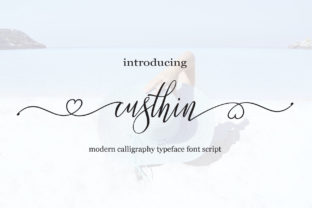
Custhin is a modern handwritten font with a gentle bounce and subtle irregularity—like ink drawn with care, not perfection. Its lowercase letters have friendly, open shapes; capitals carry just enough flair without shouting. There’s no sharpness, no forced elegance—just approachable artistry. As a maker who designs candle labels, greeting cards, wedding welcome boards, and printable wall art, I need fonts that support intention, not distract from it. Custhin does exactly that: it invites the eye in, feels personal at first glance, and quietly elevates even the simplest phrase—“Lavender & Rain,” “Hand-Poured Since 2022,” or “You’re Invited.”
I used Custhin across six real projects last month—and each time, it behaved beautifully. On kraft paper candle labels (printed via home inkjet), the letterforms held clarity down to 14pt. For vinyl stickers cut on my Cricut Maker, I resized Custhin to 8mm tall for mini gift tags and it stayed crisp—no jagged edges, no lost detail. When designing a set of digital planner pages, I paired Custhin with a clean sans serif (like Montserrat Light) for headings and body text: the contrast felt intentional, not accidental. And for a batch of seasonal printable wall art—think “Cozy Season” in soft sage and cream—it added just the right handmade charm without leaning into cliché.
What makes Custhin especially useful for makers is how thoughtfully it’s built. It includes stylistic alternates and ligatures that activate automatically in design apps like Illustrator or Affinity Designer—so “love” or “forever” can connect with graceful, natural joins instead of stiff spacing. Swashes appear on select capitals (like the uppercase “C” and “T”), perfect for monogrammed tote bags or boutique packaging ribbons. The OTF and TTF files load smoothly in Canva, Silhouette Studio, and Procreate—no font-hunting or rendering hiccups. And yes, it’s licensed for commercial use: whether you’re printing 500 candle labels, selling digital wedding invitation templates, or screen-printing shirts with Custhin-drawn phrases, you’re covered.
That said—Custhin shines brightest as a display font, not body text. Think short phrases, names, titles, product names, and decorative accents. I wouldn’t set a full greeting card message in it—but “Happy Birthday, Maya!”? Absolutely. A chalkboard-style shop sign reading “Fresh Baked Daily”? Perfect. A delicate “Thank You” printed on recycled paper tags for handmade soaps? Yes, please. Its rhythm slows the reader just enough to feel seen—and that matters when someone holds your product in their hands.
Readability is where many playful scripts falter—but Custhin stays legible even at small sizes and on textured surfaces. I tested it on linen-finish cardstock (for wedding RSVP cards), and the subtle weight variation kept words distinct. On matte black mugs, laser-etched with Custhin’s “Good Vibes Only,” the contrast stayed friendly, not fuzzy. For social media mockups, I used Custhin in listing images at 24–36pt—it looked premium, not pixelated—and customers consistently commented on how “handmade” the typography felt, even though it was digital.
Font pairing is part of the magic. Custhin loves company—especially with grounded, no-fuss companions. Try it with a simple serif like Lora for elegant wedding stationery, or a rounded sans like Quicksand for cheerful kids’ printables. With bold display fonts (like Bebas Neue), Custhin adds softness and balance—ideal for boutique signage or layered SVG designs. And if you're layering multiple handwritten fonts, keep it to one primary script: Custhin plays well with others, but it doesn’t need competition to stand out.
I also checked what’s included before diving in: full Latin character set, basic punctuation, numerals, and multilingual support for Western European languages (great for sellers shipping across borders). No extended Cyrillic or Arabic—but for most crafters serving English-speaking markets or designing bilingual holiday tags (English + Spanish), it’s more than sufficient. File formats are standard and reliable—no missing glyphs or broken kerning in testing.
Real talk: Not every font earns repeat use. But Custhin has become my go-to for anything that needs heart without heaviness. It’s on my current bestseller—lavender-scented candle labels with minimalist botanical line art—and it’s in the draft folder for next month’s autumn sticker sheet (“Pumpkin Spice & Everything Nice”). It’s even in my shop banner, paired with a thin sans serif, because yes—it works for branding too. Not as a logo font per se, but as a signature touch: the handwritten flourish beside your shop name, the warm whisper behind your product story.
If you work with physical goods—candles, ceramics, bath bombs, stationery—or create digital downloads like planners, wall art, or wedding suites, Custhin fits like a well-worn apron: functional, familiar, and full of quiet confidence. It won’t shout over your photography or overwhelm your illustrations. Instead, it lifts them—adding sincerity, charm, and that unmistakable handmade soul.
So next time you’re staring at a blank label, sketching a greeting card layout, or prepping a digital template preview—don’t reach for the default script. Reach for Custhin. Let it remind you that great typography isn’t about perfection. It’s about presence. And this Script Handwritten font? It shows up—every single time.